Writing Against the Clock
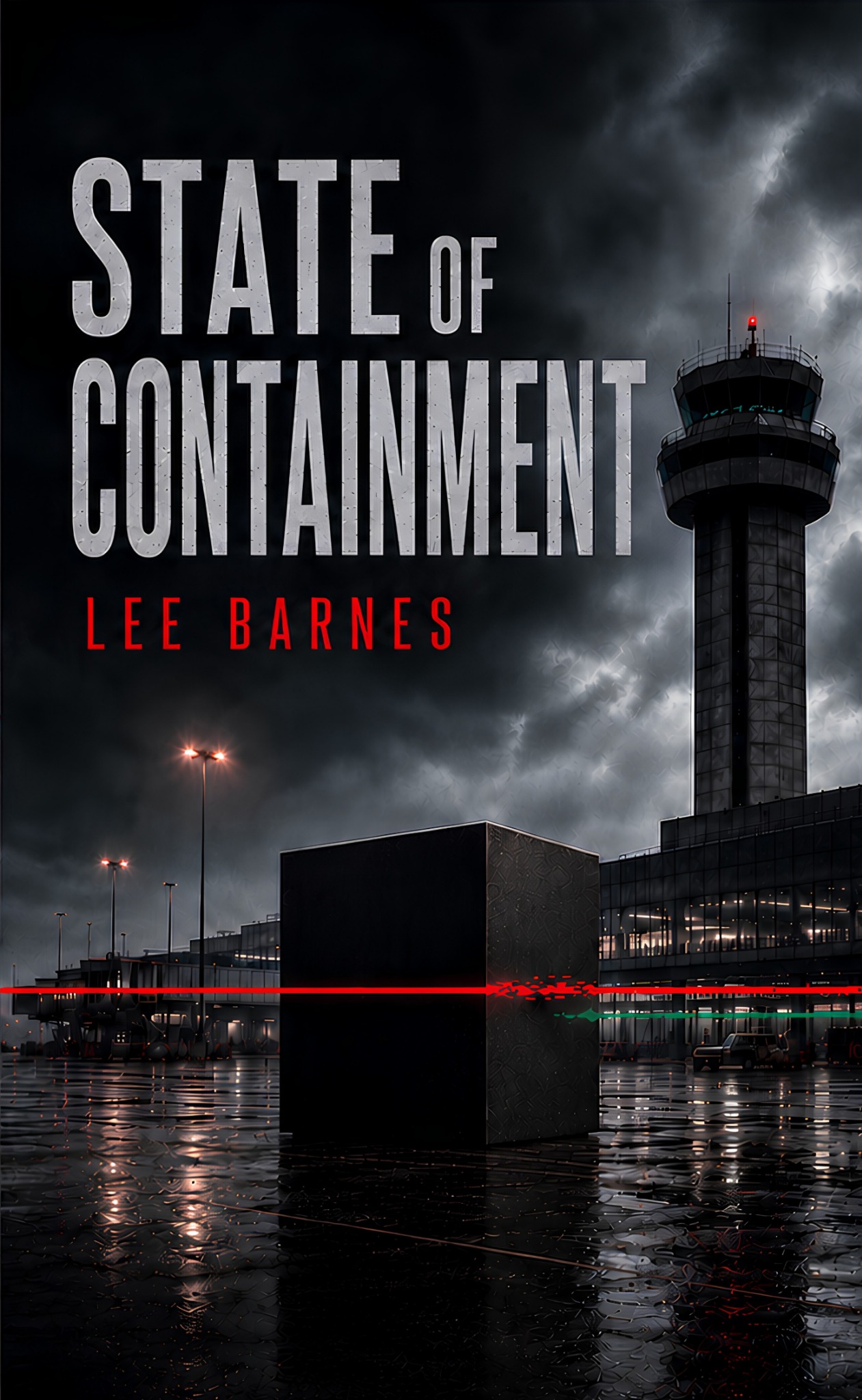
A deadline can give a thriller momentum, but it needs to do more than provide a countdown. In State of Containment, the five-day limit changes what the characters can discover, where they can go and how long they have to decide who or what they can trust.
Lee Barnes
One of the central constraints in State of Containment is time.
Matthew James has five days before the containment order becomes irreversible. After that, whatever possibility remains of regaining control will have disappeared.
A deadline is a familiar part of a thriller. Something will happen at a particular time and the characters have to prevent it. Used badly, it can feel rather mechanical. People keep looking at clocks, announcing how little time remains and making decisions that nobody sensible would make under normal circumstances.
The more interesting question for me was what a deadline actually removes.
Time allows people to gather information, test assumptions, consult others and reconsider a decision. Most organisations depend on having at least some of it. Problems are assessed. Options are discussed. Decisions are escalated. Further meetings are arranged, sometimes to confirm the conclusions of the previous meetings.
In State of Containment, those options disappear quite quickly.
Communications have failed. Parts of the city are inaccessible. Information arrives late, if it arrives at all, and there is no longer any certainty that the systems people rely on are working for their benefit.
Matthew understands some of the logic behind what is happening, but understanding the system does not mean he knows everything it is doing. He is trying to make decisions while moving through a city that is changing around him, using incomplete information and knowing that waiting for greater certainty may leave him with no decision to make.
That became one of the most useful aspects of the five-day limit.
It means that choices cannot be postponed indefinitely. Routes have to be chosen without knowing whether they remain open. People have to decide which pieces of information they believe. A possible solution may have to be followed before anybody can be certain that it will work.
The deadline also affects the physical shape of the story.
Birmingham is not a compact fictional setting where every important location is conveniently within walking distance. Roads, railways, service routes, buildings and other pieces of infrastructure connect the city, but they can also divide it when they stop operating normally.
Getting from one place to another therefore becomes part of the problem.
A route that makes sense on a map may be useless once access has been restricted. A journey that would normally be unremarkable becomes much less predictable when doors seal, transport corridors close and the system begins directing movement for reasons that have nothing to do with helping people escape.
The passage of time also has a cumulative effect.
People become tired. Supplies diminish. Small injuries matter more. Decisions made on the first day create problems on the second or third. By the fifth day, the characters are not simply dealing with a larger version of the original emergency. They are carrying everything that has happened since it began.
That was important because a deadline should change behaviour, not just appear at the start of each chapter.
Matthew's knowledge gives him an advantage, but it also gives him a particular responsibility. He recognises elements of the Janitor, the failsafe he helped to create, within the containment network. He may also have one way of forcing a reset.
What he does not have is enough time to understand every consequence before acting.
That is where the five-day structure became more than a way of creating tension. It helped shape the routes the characters could take, the information they could trust and the decisions they could no longer avoid.
Without it, this would have been a different story.
State of Containment will be published on 24 September 2026. More about State of Containment.